Kazerne Dossin is a unique memorial site in Belgium. During the Second World War, the barracks served as the “SS Sammellager Mecheln,” a transit camp for more than 25,000 Belgian and Northern French Jews and Roma. Today, the museum focuses on historical awareness, human rights, and raising awareness about racism and exclusion.
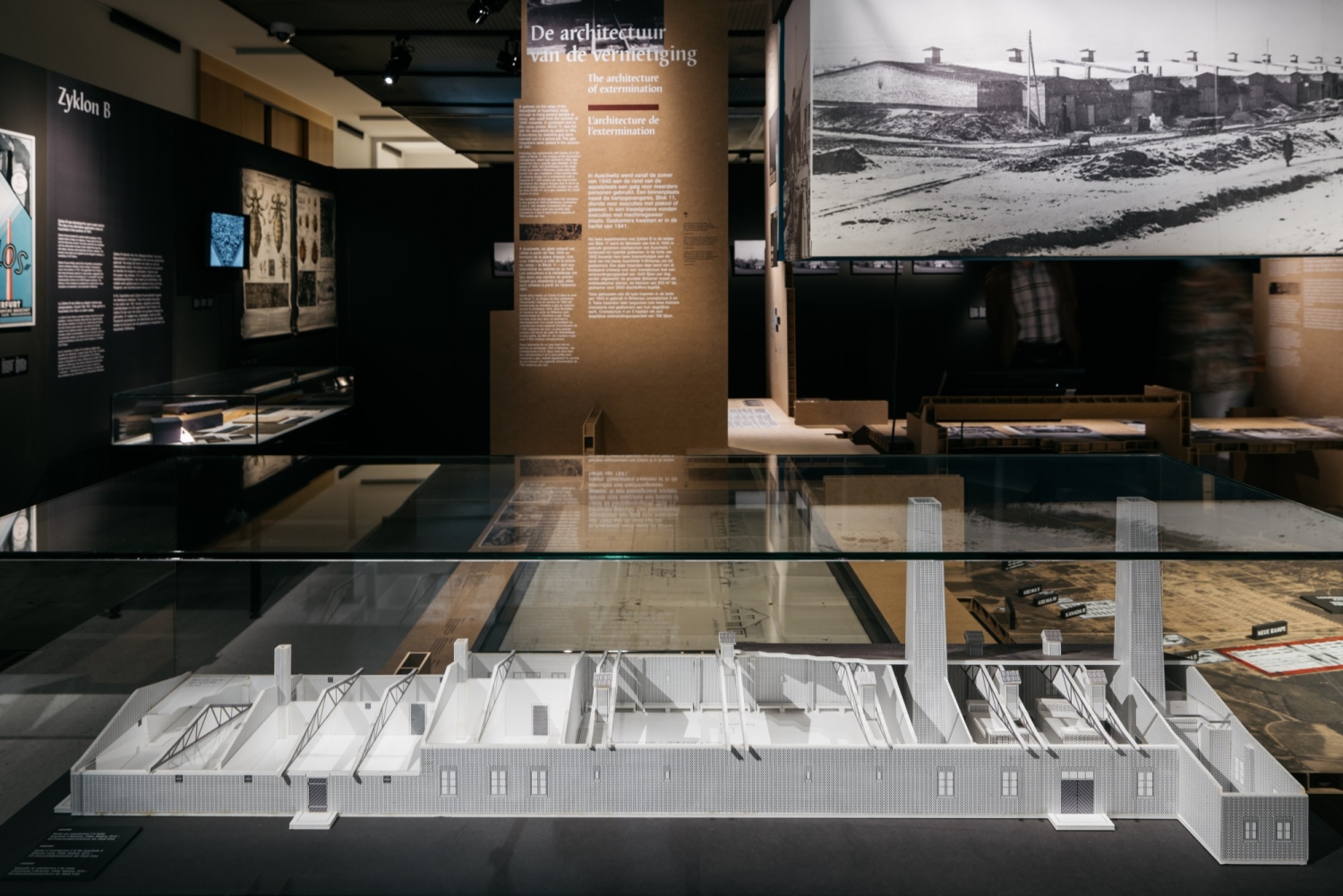
The exhibition Auschwitz.camp, developed to mark the 75th anniversary of the Liberation, explored the complex origins of Auschwitz. It went beyond the icon of the Holocaust as a killing center and highlighted the merging of colonial, racial, and economic motives that shaped the camp and its surroundings.
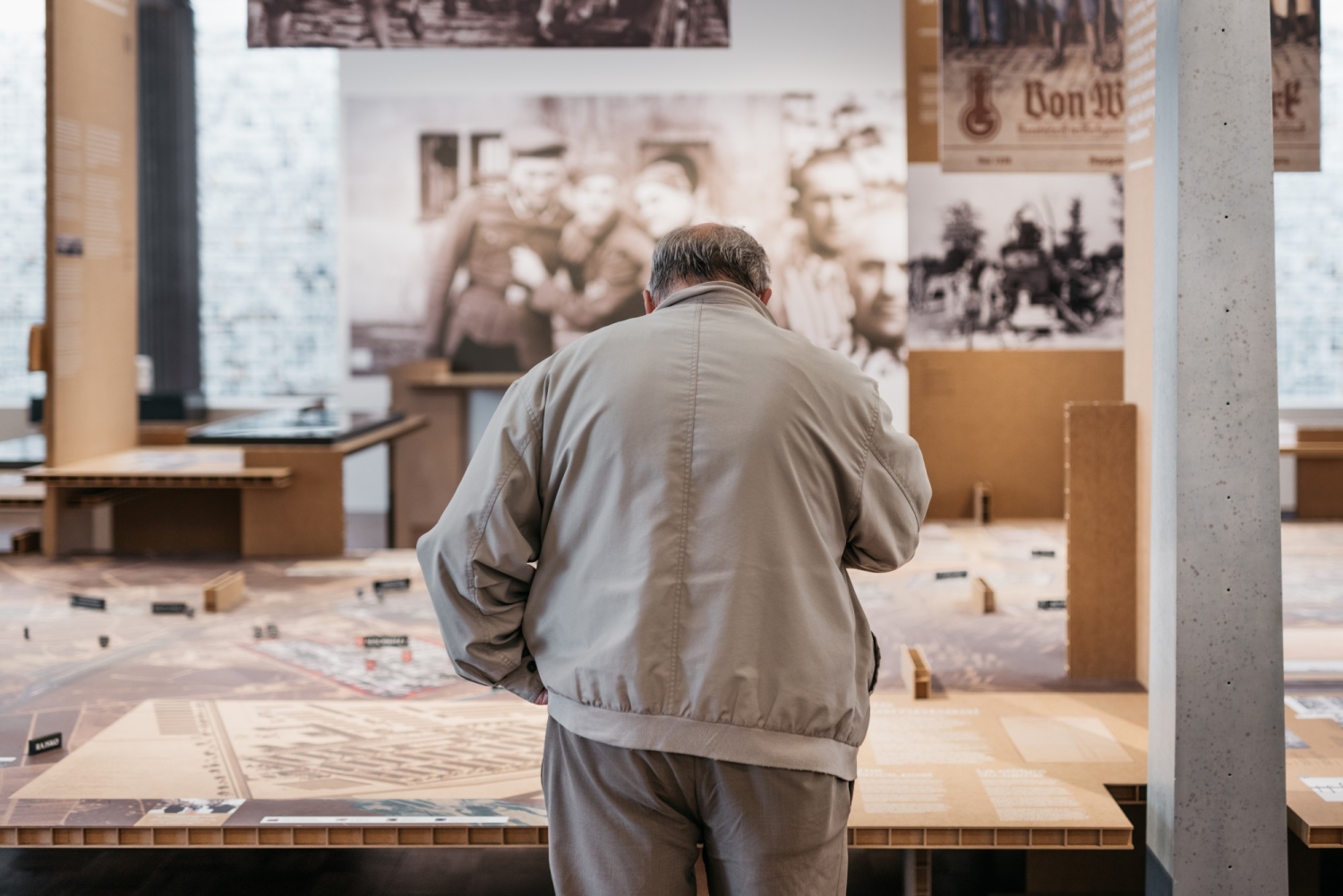
Visitors were guided through the central floor plan of Auschwitz, which served as the basis for telling the various sub-stories. Objects from different collections were respectfully integrated, supported by personal narratives through the SS album of Höcker and the victim album of Lilly Jacob. Photographs by Hans Citroen showed what remains of this history today.
The scenography was modular and mobile, designed as a carrier for the graphic design. Panels were printed and milled directly, fitting together like a Meccano set. This created a powerful overall image in which graphics, video, and objects formed one coherent experience.
24.10.2019 - 06.09.2020
Production: Blackbirds, Ocular